- 082 922 4616
- Mon - Fri: 8:00 - 17:00

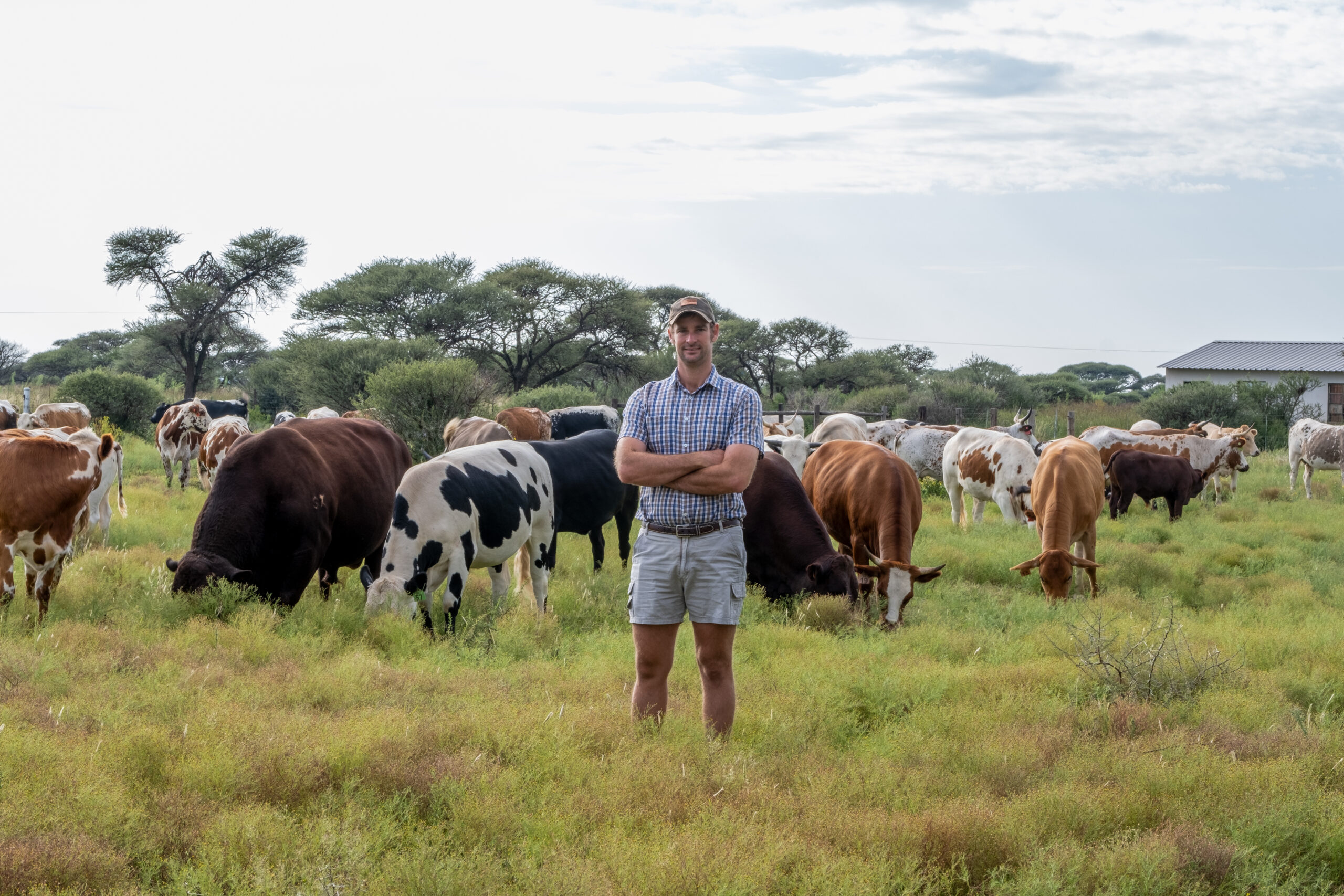
DJ Lubbe was raised on a dryland farm in the Christiana district. Consequently, he was interested in farming from a young age, which led him to buy a few registered Simmentalers when he was only thirteen. He sold his cattle in 2005 to pay for training towards his pilot licence. Once he had obtained his licence he flew commercially for some years. However, he longed for the farm and returned in 2014 to establish a flying school in the district. He was thus able to continue keeping his passion for flying alive, while farming at the same time.
In 2016, he decided to start farming Nguni and Sanga-type cattle as Christiana is a relatively low rainfall area. These cattle proved to be the best choice for him since they are highly adaptable to different grass types and conditions. They are also not heavy grazers in comparison to other beef breeds. However, DJ soon realised he needed to increase profitability without losing the adaptability of the indigenous breeds.
A TURNING POINT WITH SUSSEX
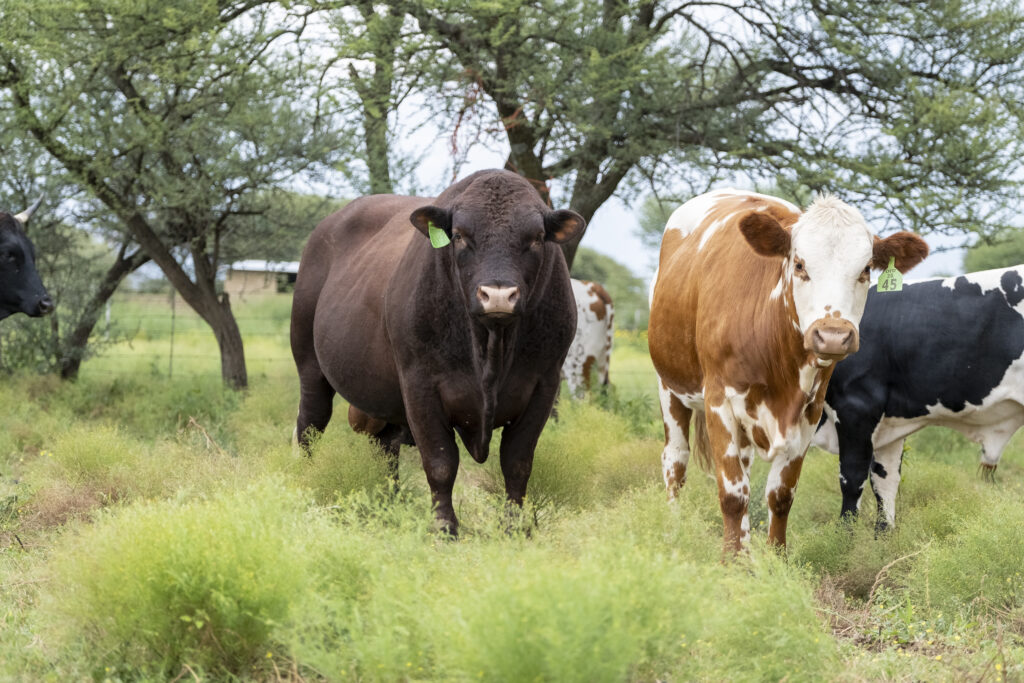
In 2018, he introduced Sussex bulls into the herd and the logic behind the decision soon became apparent through the excellent results obtained. He noticed that half of the first-generation weaners had primarily a solid red colour and had a weight increase of approximately 25kg.
With the second generation, he achieved his goal of breeding a uniform group of calves with a red coat that also showed a significant increase in weight. There was also a big improvement in the general conformation and capacity of the weaners.
In the past, huge success had been achieved in crossbreeding the Sussex with Sanga cattle in the more arid regions of the country. Although highly adaptable and fertile, some of the Sanga breeds produce lighter weaners, and different colour variations among the calves detract from a uniform calf crop. The Sussex bulls’ introduction into the herd resulted in an increase in weaner weight, uniformity of colour and quality of the replacement heifers, mainly due to the prepotency found in this old, pure-bred breed.
THE BENEFITS OF CROSSBREEDING
The benefit of being able to market weaners and oxen off the veld, makes the Sussex very valuable, due to their relatively early maturity and easy fleshing/ finishing attributes. This is especially important for crossbreeding using latermaturing Sanga-type cattle. The resulting hybrid vigour becomes significant in gene pools of very different genetic backgrounds.
The considerable advantage of crossbred cattle is that they exhibit the strengths of all breeds from which they descend, with an added benefit of heterosis. Heterosis occurs when progeny from different breeds or crosses between breeds exhibit greater adaptability, better growth rates and fertility than the original parents. Heterosis tends to be most important for heritable traits such as fertility and improved conformation.
THE CROSSBREEDING DILEMMA
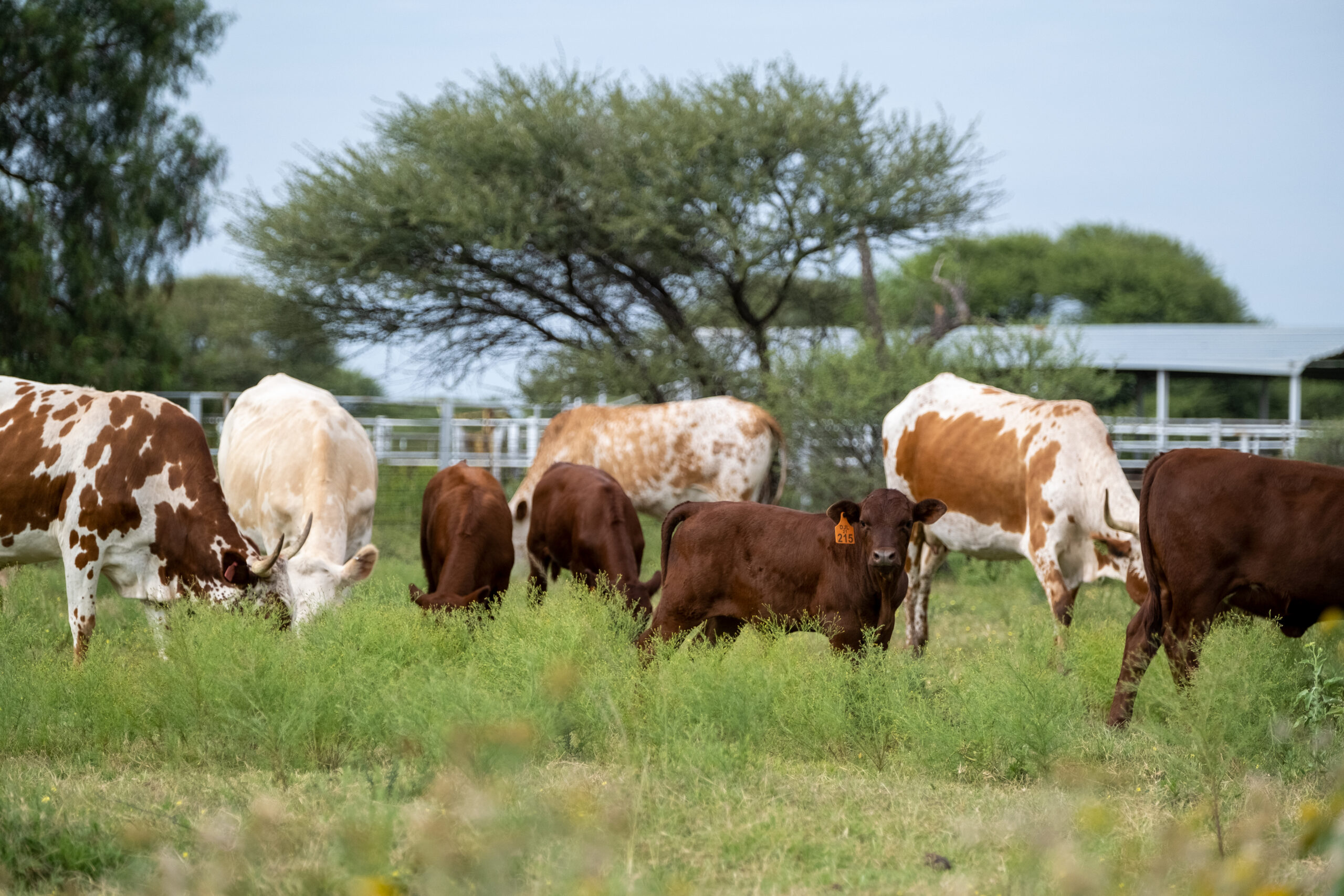
The challenge with crossbreeding is that consideration must be given to both superior weaners and replacement heifers. The Sussex is a medium-frame breed that produces excellent weaners and replacement heifers. This balance is carried over to the progeny and with a good measure of heterosis, it makes the Sussex an excellent choice in any crossbreeding programme.
SOUTH AFRICAN PREFERENCES
In the South African beef industry, it is common knowledge that there is a preference for red cattle. Their heat tolerance ability has not been scientifically proven, but the reality is that uniform red animals are preferred. As the Sussex is largely dominant in this respect, they will successfully introduce a dark red colour into any indigenous herd. In the case of some indigenous breeds, this has an enormous economic influence on the marketability of calves and cows alike.
DJ is now a stud Sussex breeder and there is a high demand for his bulls from producers facing similar challenges.
** Original article on AgriOrbit